Sequoia Animal Hospital provides soft tissue surgery for dogs and cats in Tulare, CA, including both routine procedures and more advanced surgical care. Our veterinary team evaluates each patient individually and helps pet owners understand whether surgery, medical treatment, diagnostic testing, monitoring, or referral is the safest next step.
Advanced soft tissue procedures available through Sequoia Animal Hospital include salivary gland removal, brachycephalic airway surgery, total ear canal ablation (TECA), corkscrew tail caudectomy, feline perineal urethrostomy (PU), and anal gland sacculectomy.
We welcome pet owners from Tulare, Visalia, Farmersville, Tipton, Pixley, Exeter, Lindsay, Porterville, Corcoran, and surrounding Central Valley communities who are looking for evaluation or treatment of a surgical condition.
What Is Soft Tissue Surgery?
Soft tissue surgery includes procedures involving areas of the body other than the bones and joints. Depending on the condition, surgery may involve the skin, ears, airway, salivary glands, urinary tract, anal glands, abdomen, or other internal and external tissues.
Some soft tissue surgeries are relatively routine, while others require more advanced surgical planning and experience. Our Pet Surgery page explains our broader approach to veterinary surgery, anesthesia, monitoring, pain management, and recovery.
Advanced Soft Tissue Surgeries We Perform
The appropriate procedure depends on your pet’s diagnosis, symptoms, overall health, and the expected benefits and risks of surgery. Some of the advanced soft tissue procedures available through Sequoia Animal Hospital include:
Salivary Gland Removal and Salivary Mucocele Surgery
A salivary mucocele develops when saliva leaks from a damaged salivary gland or duct and collects in the surrounding tissues. Depending on where the leakage occurs, pet owners may notice swelling beneath the jaw or neck, swelling beneath the tongue, difficulty eating or swallowing, or another unusual swelling around the head or throat.
Simply draining a salivary mucocele may provide temporary relief, but the fluid can return if the affected gland continues to leak. When surgery is appropriate, removal of the affected salivary gland and associated tissue can address the source of the problem and reduce the likelihood of recurrence.
Before recommending surgery, our veterinary team will evaluate the location and extent of the swelling and consider whether additional diagnostic testing is needed. Treatment planning may include a physical examination, laboratory testing, imaging, or evaluation of fluid or tissue when appropriate.
If your dog or cat develops an unexplained swelling around the jaw, neck, mouth, or throat, contact our team for an examination. Swelling that interferes with breathing or swallowing should be evaluated promptly.
Brachycephalic Airway Surgery
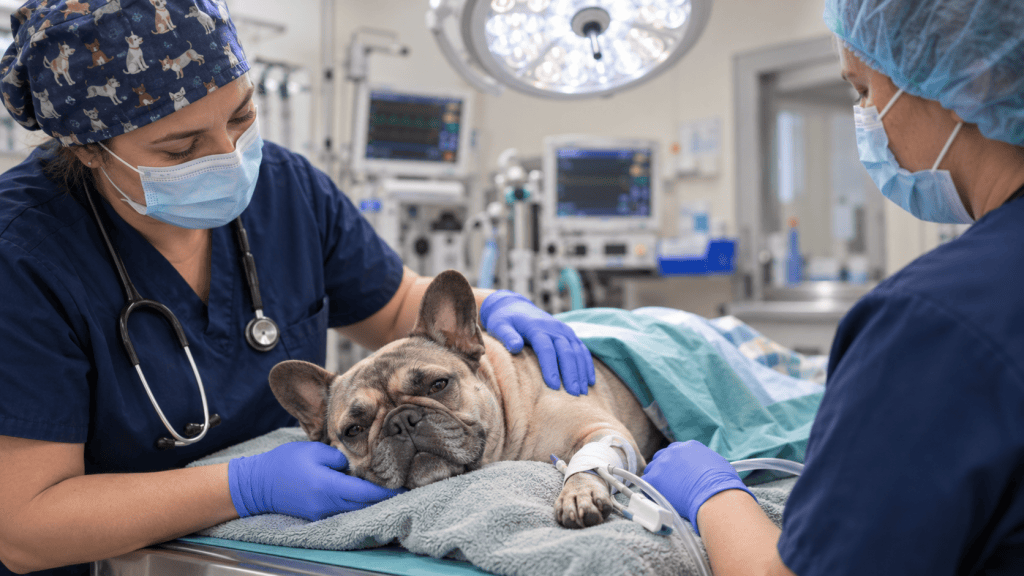
Dogs with short, broad skull shapes — including French Bulldogs, English Bulldogs, Pugs, Boston Terriers, and other brachycephalic breeds — can be affected by brachycephalic obstructive airway syndrome (BOAS).
These dogs may be born with one or more anatomical changes that restrict airflow, including narrow nostrils (stenotic nares), an elongated soft palate, and other changes involving the upper airway.
Signs of brachycephalic airway disease may include:
- Noisy or labored breathing
- Very loud snoring
- Difficulty exercising or keeping up during activity
- Gagging, retching, or coughing
- Difficulty tolerating heat
- Excessive panting or prolonged recovery after exercise
- Episodes of respiratory distress in more severely affected dogs
Not every brachycephalic dog requires surgery. When anatomical airway obstruction is significantly affecting breathing or quality of life, surgical treatment may be recommended. Depending on the individual patient, surgery can include widening narrow nostrils, shortening an elongated soft palate, or addressing other obstructive tissue when appropriate.
The goal is to improve airflow and help the dog breathe more comfortably. Because airway disease can vary considerably from one dog to another, an examination and individualized surgical plan are important before deciding whether surgery is appropriate.
If your dog is struggling to breathe, has blue or gray gums, collapses, or appears to be in significant respiratory distress, seek veterinary care immediately.
Total Ear Canal Ablation (TECA)
Total ear canal ablation, commonly called TECA, may be considered for dogs or cats with severe chronic ear disease when repeated medical treatment is no longer providing adequate comfort or control.
Conditions that may lead to consideration of TECA include severe recurring ear infections, extensive chronic inflammation, narrowing or mineralization of the ear canal, polyps, masses, or other painful ear disease.
The procedure removes diseased ear canal tissue with the goal of eliminating a source of ongoing pain and infection. Pets being considered for TECA need careful evaluation because the condition of the ear, underlying disease, hearing, and surrounding structures can affect treatment planning.
Corkscrew Tail Caudectomy
Some Bulldogs, French Bulldogs, Pugs, and other breeds can develop a tightly curled, inverted, or deeply recessed tail that creates painful skin folds. Moisture and debris trapped around these folds can contribute to chronic dermatitis, infection, odor, itching, and discomfort.
When ongoing medical and skin care cannot adequately control the problem, corkscrew tail caudectomy may be recommended. Surgery removes the problematic tail and associated folds to address the underlying anatomical cause of recurrent irritation.
Feline Perineal Urethrostomy (PU)
Perineal urethrostomy, or PU surgery, is performed in male cats when widening the urinary opening may help manage recurrent or difficult urethral obstruction.
Male cats have a naturally narrow urethra that can become blocked by inflammatory material, crystals, stones, or other debris. Cats that experience repeated urinary blockages or certain urethral problems may be candidates for PU surgery.
The procedure creates a wider permanent urinary opening to reduce the likelihood of obstruction at the narrowest portion of the urethra. PU surgery does not eliminate every form of urinary tract disease, so continued veterinary care, monitoring, diet recommendations, or other treatment may still be needed after surgery.
A cat that is repeatedly attempting to urinate but producing little or no urine may have a life-threatening urinary obstruction and should receive veterinary care immediately.
Anal Gland Sacculectomy
Anal gland sacculectomy is surgical removal of one or both anal sacs. Surgery may be discussed for dogs or cats with recurring anal gland infections, repeated abscesses, chronic painful disease, certain anal sac masses, or other problems that cannot be adequately controlled with medical treatment.
Because important nerves and muscles are located near the anal sacs, the veterinarian will evaluate the individual condition and discuss the potential benefits, risks, and expected recovery before recommending surgery.
Evaluation and Surgical Planning
Advanced soft tissue surgery begins with understanding the condition being treated. Our veterinary team will review your pet’s symptoms, medical history, medications, previous treatment, and any diagnostic information already available.
Depending on the condition and procedure, surgical planning may include:
- A physical examination and surgical consultation
- Laboratory testing before anesthesia
- Veterinary ultrasound when internal structures need further evaluation
- Digital X-rays or other diagnostic imaging when appropriate
- Review of records, imaging, or laboratory results from another veterinarian
- An individualized anesthesia and monitoring plan
- Pain-management planning before and after surgery
- Referral for additional specialty care when it is the safest option for the patient
If another veterinarian has already evaluated your pet, please ask that relevant examination notes, laboratory results, imaging, medication information, and previous treatment records be sent to Sequoia Animal Hospital before the consultation when possible.
Anesthesia, Monitoring, and Recovery
Many advanced soft tissue procedures require general anesthesia. Before surgery, we consider your pet’s age, health history, examination findings, laboratory results, medications, and the procedure being performed when developing the anesthetic and recovery plan.
During and after surgery, our team focuses on patient monitoring, pain control, incision care, and a safe recovery from anesthesia. Home-care instructions will vary according to the procedure and may include medication, activity restrictions, feeding instructions, incision monitoring, protective collars or garments, and scheduled recheck visits.
For selected patients, veterinary laser therapy may also be discussed as part of a broader post-surgical comfort and recovery plan when appropriate.
Please contact us if your pet develops unexpected swelling, bleeding, discharge, significant pain, repeated vomiting, difficulty urinating, difficulty breathing, or another concerning change during recovery.
Soft Tissue Surgery or Orthopedic Surgery?
Soft tissue surgery generally involves organs, skin, glands, the airway, urinary tract, ears, and other non-bony tissues. Orthopedic surgery focuses primarily on bones, joints, ligaments, fractures, and conditions affecting movement and skeletal stability.
For pets with fractures, cruciate ligament injuries, kneecap problems, hip conditions, or other bone and joint concerns, visit our Orthopedic Surgery page.
Soft Tissue Surgery Questions
Does Sequoia Animal Hospital perform advanced soft tissue surgery?
Yes. Sequoia Animal Hospital performs advanced soft tissue procedures for dogs and cats, including salivary gland removal, brachycephalic airway surgery, TECA, corkscrew tail caudectomy, feline PU surgery, and anal gland sacculectomy. The appropriate treatment depends on the individual patient’s diagnosis and health.
What is a salivary mucocele?
A salivary mucocele is a collection of saliva that develops when a salivary gland or duct leaks into surrounding tissue. It may appear as swelling around the jaw, neck, mouth, or throat. Surgical removal of the affected salivary gland may be recommended when the condition is persistent or recurring.
Can brachycephalic airway surgery help my Bulldog or French Bulldog breathe better?
For dogs whose breathing is restricted by problems such as narrow nostrils or an elongated soft palate, surgery may improve airflow and comfort. Not every short-nosed dog needs surgery, so an examination is necessary to determine whether an airway procedure is appropriate.
When might a cat need PU surgery?
PU surgery may be recommended for selected male cats with repeated urethral blockages, urethral narrowing, or other problems that make recurrent obstruction likely. A urinary blockage is an emergency and should be treated promptly.
Does every soft tissue condition require surgery?
No. Some conditions may be treated with medication, monitoring, dietary changes, wound care, or another non-surgical approach. Surgery is recommended when our veterinary team believes it offers an appropriate benefit based on the diagnosis, severity of the condition, and your pet’s overall health.
Can my veterinarian refer my pet to Sequoia Animal Hospital for surgery?
Yes. If your pet has already been evaluated elsewhere, you can ask your veterinarian to send relevant medical records, diagnostic results, X-rays or other imaging, and medication information to our hospital. We can review that information as part of the surgical evaluation.
Advanced Soft Tissue Surgery in Tulare, CA
Advanced soft tissue procedures are not available at every general veterinary hospital. Sequoia Animal Hospital welcomes dogs and cats from Tulare, Visalia, Farmersville, Tipton, Pixley, Exeter, Lindsay, Porterville, Corcoran, and surrounding Central Valley communities for surgical evaluation and treatment.
For broader information about surgery at our hospital, visit our Pet Surgery page. Pet owners traveling from farther Central Valley communities can also learn more about our regional surgical services on our Central Valley Veterinary Surgery and Orthopedic Care page.
Contact Sequoia Animal Hospital About Soft Tissue Surgery
If your dog or cat has been diagnosed with a condition that may require soft tissue surgery, or another veterinarian has recommended surgical evaluation, contact Sequoia Animal Hospital in Tulare. Our team can explain what records or diagnostic information may be helpful and help you determine the appropriate next step.
Contact Sequoia Animal Hospital to ask about soft tissue surgery for your dog or cat.
Reviewed for accuracy by Dr. Deol and the Sequoia Animal Hospital veterinary team.