At Sequoia Animal Hospital, we provide pet dental care in Tulare, CA, for dogs and cats. We welcome pet owners from Visalia, Farmersville, Tipton, and nearby communities throughout Tulare County. Dental disease can cause pain, bad breath, infection, tooth loss, and changes in eating or behavior, so routine oral health care is an important part of your pet’s overall wellness.
Why Dental Care Matters for Dogs and Cats
Your pet’s mouth can affect far more than their breath. Plaque, tartar, gingivitis, fractured teeth, oral pain, and periodontal disease can make it uncomfortable for pets to eat, chew, play, or be handled around the face.
Regular dental care can help us:
- Identify dental disease before it becomes advanced
- Reduce oral pain and inflammation
- Address infected, loose, fractured, or damaged teeth
- Improve your pet’s comfort when eating and chewing
- Support healthier gums and fresher breath
- Recommend home-care options that fit your pet’s needs
Dental care is most effective when it includes both veterinary evaluation and realistic at-home support between visits.
Signs Your Pet May Have Dental Disease
Dogs and cats often hide dental pain, so the signs may be subtle. Some pets continue eating even when their mouths are uncomfortable, especially if the problem develops slowly over time.
Please schedule an oral health evaluation if you notice:
- Bad breath
- Yellow or brown tartar on the teeth
- Red, swollen, or bleeding gums
- Loose, broken, discolored, or missing teeth
- Drooling or pawing at the mouth
- Chewing on one side of the mouth
- Dropping food or seeming reluctant to eat hard food
- Swelling around the face, jaw, or under the eye
- Changes in behavior, appetite, or activity
If your pet has facial swelling, severe mouth pain, bleeding, or difficulty eating, contact our team promptly so we can help determine the safest next step.
What Happens During a Pet Dental Exam?
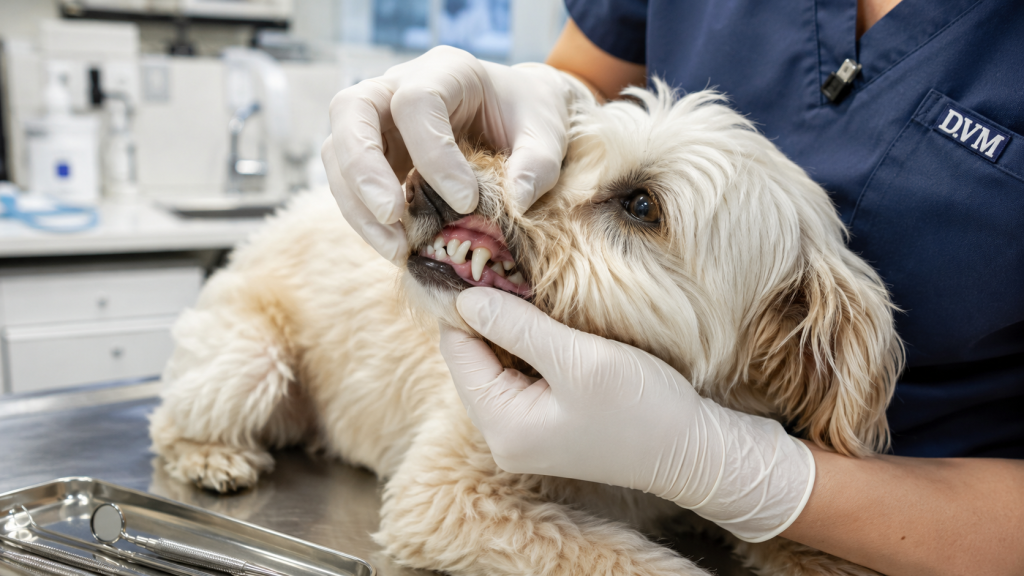
A dental evaluation may begin during a routine wellness exam or a visit focused specifically on oral health. Our veterinarian will examine your pet’s mouth as much as your pet comfortably allows while also considering your pet’s overall health.
During a dental exam, we may assess:
- Teeth, gums, tongue, lips, and oral tissues
- Bad breath, tartar, gingivitis, and gum recession
- Loose, fractured, worn, or discolored teeth
- Pain, swelling, masses, or areas of infection
- Your pet’s age, breed, diet, chewing habits, and health history
- Whether a professional dental cleaning or treatment plan is recommended
Some dental problems are hidden below the gumline and cannot be fully evaluated in an awake pet. When needed, we will explain the next diagnostic or treatment step.
Professional Dental Cleanings for Pets
A professional dental cleaning allows the veterinary team to clean areas of the mouth that cannot be reached with routine brushing alone, including below the gumline. This is important because periodontal disease often begins where it is difficult to see from the outside.
Depending on your pet’s needs, a dental cleaning may include:
- Pre-anesthetic evaluation and safety screening
- Anesthesia and patient monitoring
- Scaling to remove plaque and tartar above and below the gumline
- Polishing the teeth after scaling
- Detailed oral examination while your pet is anesthetized
- Dental radiographs when recommended for your pet
- Treatment recommendations for damaged or diseased teeth
We will review your pet’s dental findings with you and explain any recommended treatment or follow-up care.
Dental X-Rays and Hidden Oral Disease
Some dental disease is not visible during a simple awake mouth check. Dental radiographs can help veterinarians evaluate tooth roots, bone, and structures below the gumline, where painful disease may otherwise be missed.
Dental imaging may help identify:
- Tooth-root problems
- Bone loss around teeth
- Abscesses or infection
- Fractured teeth or damaged roots
- Retained tooth roots
- Feline tooth resorption or other cat-specific dental concerns
If dental radiographs or digital radiology are recommended, we will explain why they may be helpful for your pet’s diagnosis and treatment plan.
Tooth Extractions and Dental Treatment
When a tooth is severely diseased, fractured, infected, loose, or painful, extraction may be the most compassionate treatment option. Removing a painful tooth can improve comfort and help prevent ongoing infection or irritation.
Dental treatment recommendations may depend on:
- The condition of the tooth and surrounding gum tissue
- Whether the tooth is loose, fractured, infected, or painful
- Radiographic findings when imaging is performed
- Your pet’s age, health, and anesthetic considerations
- The likelihood that the tooth can remain comfortable and functional
Our team will talk with you about the plan, expected recovery, medications, and home-care instructions after dental treatment.
Anesthesia and Safety During Dental Procedures
Professional pet dental cleanings and many dental treatments require anesthesia so the veterinary team can evaluate and clean the mouth safely, thoroughly, and humanely. Anesthesia allows your pet to remain still and comfortable while we examine areas that would be difficult or unsafe to assess while awake.
Before anesthesia, we may discuss:
- Your pet’s medical history and current medications
- Previous anesthetic experiences or medication reactions
- Recommended bloodwork or other safety screening
- Your pet’s vaccination status and recent health changes
- Food and water instructions before the procedure
- Monitoring and recovery expectations
If your pet has a chronic health condition or is a senior pet, we will consider those factors when discussing dental care and anesthesia planning. You can also learn more about our broader surgical and anesthetic care.
At-Home Dental Care for Dogs and Cats
Home dental care can help slow plaque and tartar buildup between professional cleanings. The best option depends on your pet’s temperament, mouth comfort, chewing style, and what you can realistically maintain.
At-home dental care may include:
- Tooth brushing with pet-safe toothpaste
- Dental diets or treats when appropriate
- Water additives, gels, chews, or other dental products
- Choosing products designed for pets, not people
- Avoiding hard items that can fracture teeth
- Regular veterinary rechecks when dental disease is present
Never use human toothpaste for your pet. If your pet resists brushing or seems painful, stop and ask our team for guidance.
Dental Care Through Every Stage of Life
Puppies and Kittens
Early visits give us a chance to check baby teeth, adult tooth eruption, bite alignment, retained baby teeth, and home-care habits. We can also discuss dental concerns during puppy and kitten wellness visits.
Adult Dogs and Cats
Adult pets benefit from regular oral health checks and preventive dental care. Many dental problems develop gradually, so routine monitoring can help us identify issues before they become severe.
Senior Pets
Senior pets may have more advanced tartar, gum disease, tooth wear, fractured teeth, or other health conditions that affect dental planning. We will consider your pet’s overall health when recommending dental care.
Schedule Pet Dental Care in Tulare, CA
Pet dental care in Tulare can help your dog or cat stay more comfortable, eat more easily, and avoid untreated oral disease. Whether your pet needs a dental exam, professional cleaning, or evaluation for bad breath or mouth pain, our team is here to help.
Contact Sequoia Animal Hospital to schedule a dental exam or ask whether your pet may need a professional dental cleaning.
Reviewed for accuracy by Dr. Deol and the Sequoia Animal Hospital veterinary team.