
At Sequoia Animal Hospital, we provide veterinary ultrasound in Tulare, CA, for dogs and cats. We welcome pet owners from Visalia, Farmersville, Tipton, and nearby communities throughout Tulare County. Ultrasound is a noninvasive diagnostic imaging tool that helps our veterinary team evaluate internal organs and soft tissues when a pet is sick, painful, pregnant, or needs additional information beyond a physical exam or X-rays.
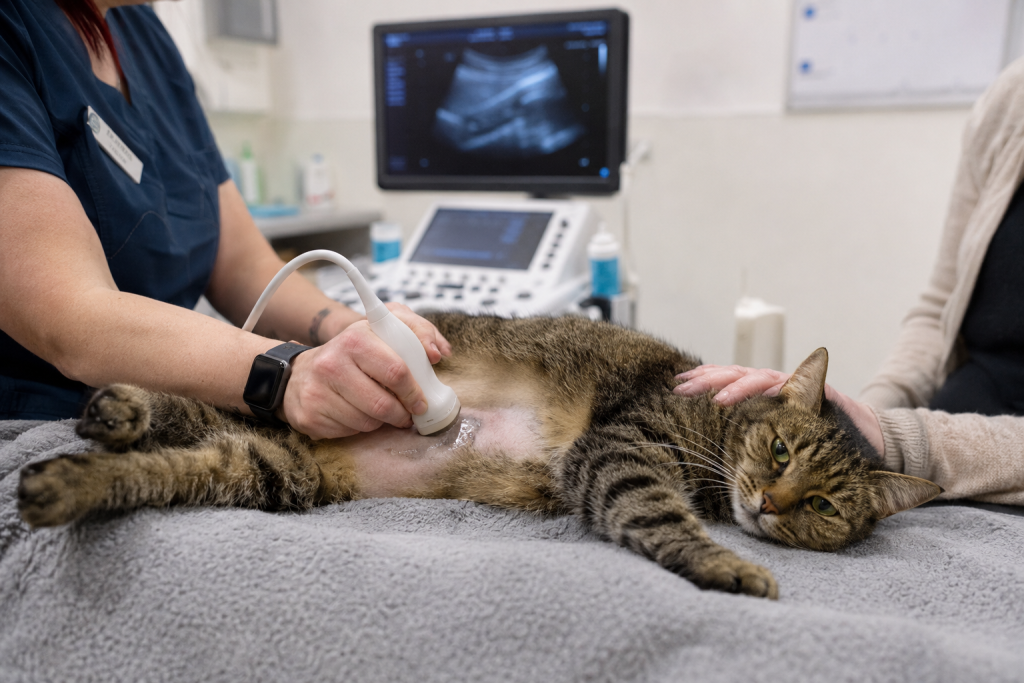
Veterinary Ultrasound for Dogs and Cats
Veterinary ultrasound uses sound waves to create images of structures inside your pet’s body. Unlike X-rays, which are especially useful for bones and certain chest or abdominal patterns, ultrasound is often helpful for evaluating soft tissues, organs, fluid, pregnancy, and some internal changes in real time.
Depending on your pet’s symptoms and exam findings, ultrasound may help us evaluate:
- Liver, spleen, kidneys, bladder, stomach, intestines, and other abdominal organs
- Fluid in the abdomen or chest
- Masses, swelling, or internal abnormalities
- Pregnancy and fetal development
- Urinary tract concerns
- Heart or chest-related concerns when appropriate
- Conditions that need follow-up after bloodwork or X-rays
Ultrasound is one diagnostic tool. We will explain whether it is the right next step for your dog or cat and how the results may guide treatment.
When Might Your Pet Need an Ultrasound?
Pets may need an ultrasound when symptoms, examination findings, lab results, or radiographs suggest an internal concern that needs a closer look. Ultrasound can help us evaluate soft-tissue structures and movement in ways that other tests may not show as clearly.
Our veterinarian may recommend ultrasound if your pet has:
- Vomiting, diarrhea, appetite changes, or weight loss
- Abdominal pain, swelling, or bloating
- Abnormal bloodwork or urine results
- Difficulty urinating or suspected bladder stones
- A mass, enlarged organ, or internal abnormality
- Pregnancy or breeding-related concerns
- A condition that needs monitoring over time
If your pet seems painful, weak, bloated, or suddenly ill, call our team so we can help you decide how quickly your pet should be examined.
Abdominal Ultrasound for Pets
Abdominal ultrasound is commonly used to evaluate the organs and structures inside the belly. It can provide valuable information when a pet has digestive symptoms, urinary problems, unexplained weight changes, abnormal lab results, or suspected internal disease.
An abdominal ultrasound may help evaluate:
- Liver and gallbladder changes
- Kidneys, bladder, and urinary tract concerns
- Spleen, pancreas, stomach, and intestines
- Internal masses, nodules, or enlarged organs
- Fluid or inflammation in the abdomen
- Pregnancy-related findings when appropriate
Ultrasound findings are interpreted alongside your pet’s symptoms, physical examination, laboratory testing, and any other diagnostic imaging.
Ultrasound and Laboratory Testing
Ultrasound is often most helpful when combined with bloodwork, urinalysis, or other laboratory testing. Lab results can show how organs are functioning, while ultrasound can help us look at organ size, shape, texture, and surrounding structures.
Together, ultrasound and lab work may help us:
- Investigate abnormal liver, kidney, or pancreatic values
- Evaluate urinary concerns alongside urinalysis results
- Look for internal changes related to vomiting, diarrhea, or weight loss
- Monitor certain chronic conditions
- Decide whether additional testing, treatment, or referral is needed
You can learn more about bloodwork, urinalysis, and other diagnostics on our in-house veterinary laboratory page.
Ultrasound and Digital X-Rays
Ultrasound and X-rays provide different types of information. X-rays are often useful for bones, joints, chest patterns, abdominal gas patterns, and certain visible foreign objects. Ultrasound is often more useful for evaluating soft-tissue organs, fluid, and some internal structures in motion.
Depending on your pet’s condition, our veterinarian may recommend:
- Ultrasound alone
- Digital X-rays alone
- Both ultrasound and X-rays for a more complete picture
- Repeat imaging to monitor changes over time
- Referral for advanced imaging or specialist review when needed
We will explain why a particular imaging test is recommended and what information we hope to gain from it.
Pregnancy Ultrasound for Dogs and Cats
Ultrasound may be used to evaluate pregnancy in dogs and cats when appropriate. It can help confirm pregnancy, assess fetal viability, and provide useful information during certain stages of gestation.
Pregnancy ultrasound may help with:
- Pregnancy confirmation
- Evaluation of fetal heartbeats when visible
- Assessing the uterus and pregnancy-related concerns
- Planning next steps for prenatal care
- Deciding whether additional imaging or monitoring is needed
Ultrasound may not provide an exact puppy or kitten count in every case. If a count is needed later in pregnancy, our veterinarian may discuss whether X-rays are more appropriate at that stage.
What to Expect During Your Pet’s Ultrasound Visit
Before performing an ultrasound, our team will review your pet’s symptoms, medical history, medications, recent lab results, and any previous imaging. We will explain the recommended area to examine and what the ultrasound may help us learn.
During the visit, we may:
- Position your pet comfortably on a padded surface
- Clip or part a small area of fur when needed for image quality
- Apply ultrasound gel to the area being examined
- Move the ultrasound probe gently over the skin
- Monitor your pet’s comfort throughout the exam
- Discuss preliminary findings or next steps when appropriate
Many pets tolerate ultrasound well. Some pets may need light sedation if they are painful, anxious, or unable to stay still enough for useful images.
Is Ultrasound Painful for Pets?
Ultrasound itself is not painful for most pets. The probe rests against the skin with gel, and the exam is usually quiet and noninvasive. If your pet is already painful because of an injury or illness, our team will handle them gently and discuss comfort options when needed.
To help your pet stay comfortable, we may:
- Use calm handling and supportive positioning
- Allow breaks when appropriate
- Recommend sedation when comfort or image quality requires it
- Adjust the plan based on your pet’s temperament and condition
Please tell us if your pet becomes fearful during veterinary visits or has had difficulty with handling in the past.
What Happens After an Ultrasound?
After the ultrasound, our veterinarian will review the findings and discuss what they may mean for your pet. In some cases, ultrasound helps guide treatment right away. In other cases, it points us toward additional testing, monitoring, referral, or a procedure.
Next steps may include:
- Medication or supportive care
- Additional lab testing
- Repeat ultrasound or other follow-up imaging
- Ultrasound-guided sampling when appropriate and available
- Pet surgery consultation when imaging suggests a surgical concern
- Referral to a specialist for advanced diagnostics or treatment
Our team will explain the results in practical terms so you understand the reason for any recommended next step.
Schedule Pet Ultrasound in Tulare, CA
Pet ultrasound in Tulare can help our veterinary team evaluate soft-tissue organs, pregnancy, fluid, pain, illness, and internal concerns that may require a closer look. If your dog or cat is sick, uncomfortable, or needs additional diagnostic imaging, we are here to help.
Contact Sequoia Animal Hospital to schedule an exam or ask whether your pet may need an ultrasound.
Reviewed for accuracy by Dr. Deol and the Sequoia Animal Hospital veterinary team.