At Sequoia Animal Hospital, we provide veterinary laser therapy in Tulare, CA, for dogs and cats. We welcome pet owners from Visalia, Farmersville, Tipton, and nearby communities throughout Tulare County. Laser therapy, also called photobiomodulation, uses targeted light energy as a noninvasive treatment option that may help reduce pain, calm inflammation, and support healing in certain pets.
What Is Veterinary Laser Therapy?
Veterinary laser therapy uses specific wavelengths of light directed at targeted tissues. The goal is to support the body’s natural healing response and help manage discomfort without an incision, injection, or medication-only approach.
Laser therapy may be recommended as part of a broader treatment plan for pets with pain, inflammation, soft-tissue injury, or recovery needs. It is not a replacement for every medication, diagnostic test, or procedure, but it can be a useful supportive therapy for some dogs and cats.
During a laser therapy visit, our team will decide the treatment area, session length, and recommended schedule based on your pet’s condition and comfort.
Conditions Laser Therapy May Help
Laser therapy is commonly used as an adjunctive treatment, meaning it may be combined with other veterinary care such as medication, rest, surgery, weight management, rehabilitation, or ongoing monitoring.
Depending on your pet’s examination findings, laser therapy may be considered for:
- Arthritis and chronic joint discomfort
- Back, neck, hip, knee, or shoulder pain
- Soft-tissue injuries, sprains, or strains
- Post-surgical discomfort and healing support
- Wounds, hot spots, or certain skin concerns
- Inflammation associated with selected painful conditions
- Mobility problems in senior pets
Because every pet is different, our veterinarian will examine your dog or cat and explain whether laser therapy is appropriate for the condition being treated.
Laser Therapy for Pain and Mobility
Pets with arthritis, stiffness, or orthopedic discomfort may benefit from a multimodal pain-management plan. Laser therapy can be one part of that plan, especially when discomfort affects walking, rising, climbing, jumping, or daily activity.
We may discuss laser therapy if your pet has:
- Stiffness after rest
- Limping or reluctance to use a leg
- Difficulty getting up or lying down
- Reduced interest in walks, play, stairs, or jumping
- Known arthritis or chronic joint disease
- Ongoing discomfort after an injury
If your pet is limping, painful, or showing mobility changes, we may recommend an orthopedic evaluation, digital X-rays, medication, weight-management support, laser therapy, or a combination of care options.
Laser Therapy After Surgery or Injury
Some pets receive laser therapy after surgery or an injury to support comfort and healing. The treatment area and schedule depend on the type of procedure, the tissues involved, and your pet’s recovery plan.
Post-procedure laser therapy may be considered after:
- Soft tissue surgery
- Selected orthopedic procedures or injuries
- Wound repair
- Dental or oral procedures when appropriate
- Other painful or inflammatory conditions discussed by the veterinarian
Laser therapy does not replace incision care, activity restriction, medications, or recheck visits. Instead, it may support the recovery plan your veterinarian has already recommended. You can learn more about our broader pet surgery services or the advanced soft tissue procedures available through Sequoia Animal Hospital.
What to Expect During a Laser Therapy Session
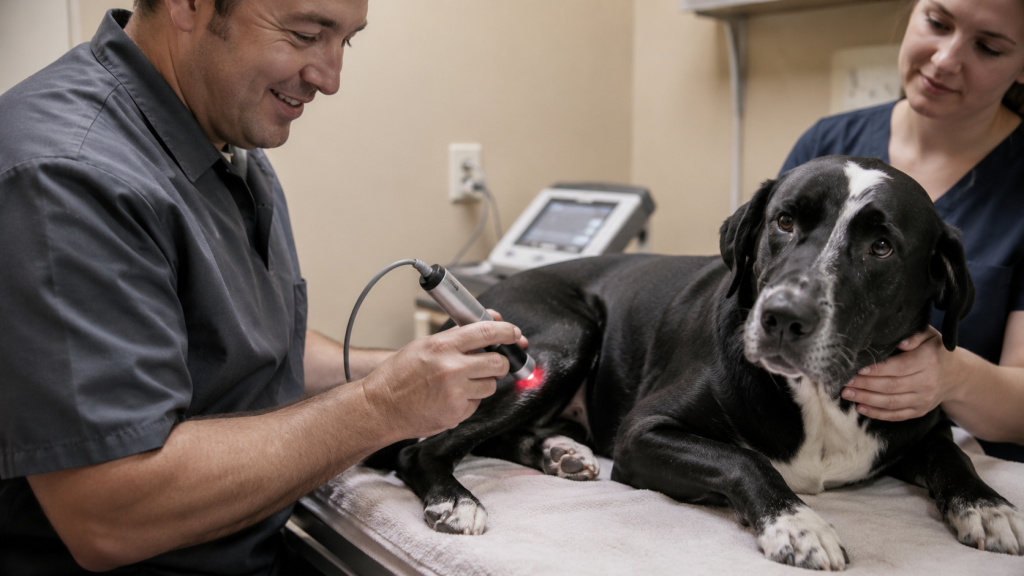
Laser therapy sessions are usually quiet and noninvasive. Many pets relax during treatment, though some may need gentle handling, reassurance, or short breaks if they are anxious or uncomfortable.
During a session, our team may:
- Position your pet comfortably
- Identify the treatment area
- Use protective eyewear when appropriate
- Move the laser handpiece over the targeted area
- Monitor your pet’s comfort throughout the treatment
- Explain the recommended number and frequency of sessions
Most sessions are completed without sedation. If your pet is painful, fearful, or difficult to handle, we will discuss the safest way to help them receive care.
How Many Laser Therapy Treatments Will My Pet Need?
The number of sessions depends on your pet’s condition, the severity of discomfort, the treatment goal, and how your pet responds. Acute injuries may require a different schedule than chronic arthritis or long-term mobility support.
Your pet’s treatment plan may consider:
- Whether the condition is new, chronic, or recurring
- The location and size of the treatment area
- Your pet’s pain level and mobility
- Medications, surgery, or other therapies already being used
- Your pet’s age, activity level, and overall health
- Progress seen during follow-up visits
We will recommend a starting plan and adjust as needed based on your pet’s comfort and response.
Is Laser Therapy Safe for Dogs and Cats?
When used appropriately by a trained veterinary team, laser therapy is generally well tolerated by many pets. Safety depends on using the correct settings, treatment area, session length, and precautions for each patient.
Before recommending laser therapy, we may consider:
- Your pet’s diagnosis or suspected condition
- Whether the treatment area is appropriate for laser therapy
- Skin, wound, or surgical-incision status
- Any masses, tumors, pregnancy concerns, or sensitive areas
- Your pet’s medications and overall health
- Whether additional diagnostics are needed first
Our team will explain the expected benefits, limitations, and precautions before treatment begins.
Laser Therapy as Part of a Larger Pain-Management Plan
Pain management works best when it is tailored to the individual pet. Laser therapy may be one tool in a larger plan that also includes diagnosis, medication, weight management, exercise changes, surgery, rechecks, or other supportive care.
A complete pain-management plan may include:
- A physical examination and diagnosis when possible
- Medication when appropriate
- Laser therapy or other supportive modalities
- Weight-management and nutrition guidance
- Activity modification and home-environment changes
- Recheck visits to monitor response
If your pet seems painful, slows down, avoids normal activities, or changes behavior, a wellness exam can help us identify the next step.
Schedule Veterinary Laser Therapy in Tulare, CA
Veterinary laser therapy in Tulare may help dogs and cats with pain, inflammation, injury recovery, or mobility concerns when it is part of the right care plan. Our team can evaluate your pet, explain whether laser therapy is appropriate, and recommend a treatment schedule.
Contact Sequoia Animal Hospital to schedule an evaluation or ask whether your dog or cat may benefit from laser therapy.
Reviewed for accuracy by Dr. Deol and the Sequoia Animal Hospital veterinary team.