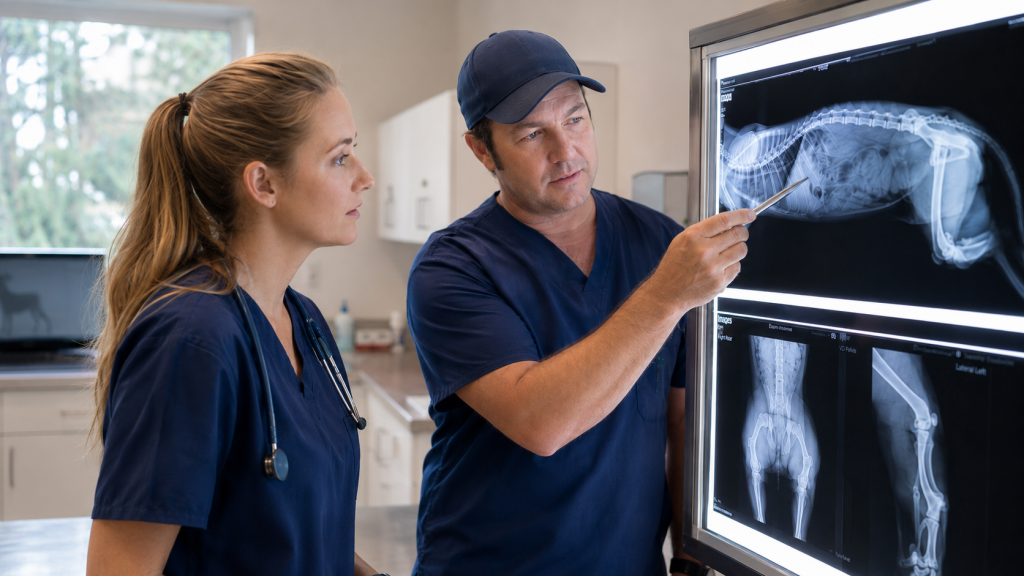
At Sequoia Animal Hospital, we provide digital radiology and pet X-rays in Tulare, CA, for dogs and cats. We welcome pet owners from Visalia, Farmersville, Tipton, and nearby communities throughout Tulare County. Digital X-rays help our veterinary team evaluate injuries, pain, illness, and internal changes that may not be visible during a physical examination alone.
Digital Radiology for Dogs and Cats
Digital radiology uses X-ray imaging to create detailed images of structures inside your pet’s body. These images can help veterinarians evaluate bones, joints, the chest, the abdomen, and certain soft-tissue structures when a pet is injured, painful, or showing signs of illness.
Pet X-rays may help us evaluate:
- Broken bones, fractures, and joint injuries
- Limping, stiffness, arthritis, and mobility concerns
- Chest, lung, and heart-related changes
- Abdominal pain, bloating, or suspected foreign objects
- Bladder stones or urinary concerns
- Dental, skull, or jaw concerns when appropriate
- Pre-surgical or follow-up evaluations when imaging is needed
Radiographs are one diagnostic tool. Depending on your pet’s condition, we may also recommend bloodwork, ultrasound, additional imaging, monitoring, treatment, or referral.
When Might Your Pet Need X-Rays?
Pets may need X-rays after an injury, when they are showing pain, or when a physical exam suggests that more information is needed. Digital radiology can provide useful information quickly, which can help guide the next step in your pet’s care.
Please contact us if your pet has:
- Limping, swelling, or trouble using a leg
- Pain after a fall, jump, accident, or rough play
- Coughing, breathing changes, or chest concerns
- Repeated vomiting, abdominal pain, or suspected ingestion of a toy, bone, or other object
- Difficulty urinating or signs of urinary discomfort
- A mass, swelling, or internal concern that needs further evaluation
- A condition that needs monitoring before or after treatment
If your pet’s symptoms are sudden, severe, or worsening, call us so our team can help you decide whether your pet should be seen promptly.
How Digital X-Rays Help Your Veterinarian
X-rays help our veterinarian look for patterns and changes that are not obvious from the outside. We interpret imaging findings alongside your pet’s symptoms, examination findings, medical history, and any laboratory results.
Digital radiology may help us:
- Confirm or rule out certain injuries
- Assess the size, shape, and position of internal structures
- Evaluate bone and joint alignment
- Look for signs of arthritis or degenerative joint disease
- Support treatment decisions for pain, surgery, or referral
- Monitor healing or progression over time
In some cases, X-rays provide enough information to begin treatment. In others, they help identify the need for a different diagnostic test or specialty consultation.
Orthopedic X-Rays for Limping and Injuries
Digital radiology is especially useful for evaluating bone, joint, and limb concerns. If your pet is limping, painful, or recovering from an injury, X-rays may help us evaluate fractures, arthritis, joint changes, or other orthopedic problems.
Orthopedic imaging may be recommended for:
- Suspected fractures or broken bones
- Joint swelling or instability
- Arthritis and chronic stiffness
- Hip, knee, elbow, shoulder, or spine concerns
- Pre-surgical planning or follow-up after treatment
- Cases that may need an orthopedic evaluation
Our team will explain what the images show and whether your pet may need rest, medication, additional imaging, surgery, rehabilitation, or referral.
Chest and Abdominal X-Rays
Radiographs can also help veterinarians evaluate the chest and abdomen. We may recommend these images when a pet has breathing changes, coughing, vomiting, abdominal discomfort, urinary concerns, or other internal symptoms.
Chest or abdominal X-rays may help evaluate:
- Lung patterns and chest changes
- Heart size and overall chest anatomy
- Gas patterns or possible intestinal obstruction
- Bladder stones or certain urinary tract concerns
- Organ size, shape, and position
- Foreign material that may be visible on X-rays
Some conditions are not visible or fully understood on X-rays alone. If your pet needs a different type of imaging, such as veterinary ultrasound, we will explain why.
What to Expect During Your Pet’s X-Ray Visit
Before taking X-rays, our veterinarian will examine your pet and decide which views or areas should be imaged. Proper positioning is important because clear images help us interpret the results more accurately.
During the visit, we may:
- Review your pet’s symptoms and medical history
- Perform a physical examination
- Position your pet carefully for the needed images
- Use gentle handling and support to reduce stress
- Recommend mild sedation when needed for comfort or image quality
- Review the images and discuss the findings with you
Many pets can have X-rays while awake. Others may need sedation if they are painful, anxious, unable to hold still, or need positioning that would otherwise be uncomfortable.
Sedation, Comfort, and Safety
Your pet’s comfort and safety matter during imaging. If sedation is recommended, we will consider your pet’s age, health history, medications, pain level, and the type of images needed before developing a plan.
Before sedation, we may discuss:
- Your pet’s current symptoms and pain level
- Medical history and current medications
- Previous anesthetic or sedation experiences
- Recommended bloodwork or other safety screening
- Your pet’s vaccination status and recent health changes
- Recovery expectations after the images are complete
If your pet is very painful, sedation can sometimes make the imaging process safer and more comfortable while also improving the quality of the images.
Dental X-Rays and Oral Health
Dental radiographs are different from standard body X-rays, but they are also an important form of veterinary imaging. Dental X-rays can help evaluate tooth roots, bone, and disease below the gumline that may not be visible during an awake mouth check.
We may recommend dental imaging when pets have:
- Bad breath, tartar, or gum disease
- Broken, loose, or painful teeth
- Facial swelling or suspected infection
- Feline tooth resorption or other cat-specific dental concerns
- A professional dental cleaning or oral treatment plan
You can learn more about oral evaluations, professional cleanings, and dental radiographs on our pet dental care page.
Digital X-Rays and Surgical Planning
Digital radiology may be recommended before or after certain procedures. X-rays can help veterinarians evaluate an injury, understand anatomy, monitor healing, or decide whether a pet needs surgery or specialty referral.
Imaging may support surgical care by helping us:
- Evaluate injuries before a procedure
- Plan treatment for certain orthopedic or soft-tissue concerns
- Monitor healing after treatment
- Determine whether referral is recommended
- Support safer decision-making before pet surgery
We will explain whether imaging is recommended and how the results may affect your pet’s treatment plan.
Schedule Pet X-Rays in Tulare, CA
Pet X-rays in Tulare can help our veterinary team evaluate pain, injury, illness, and internal concerns so your dog or cat can receive appropriate care. If your pet is limping, coughing, vomiting, painful, or not acting like themselves, diagnostic imaging may help guide the next step.
Contact Sequoia Animal Hospital to schedule an exam or ask whether your pet may need digital radiology.
Reviewed for accuracy by Dr. Deol and the Sequoia Animal Hospital veterinary team.