Looking for fracture repair for dogs and cats in Tulare, CA? Sequoia Animal Hospital provides orthopedic evaluation and selected fracture repair services for pets with broken bones, traumatic injuries, limping, pain, and mobility problems.
A fracture can happen after a fall, car accident, rough play, bite wound, twisting injury, or other trauma. Some pets cannot use the injured leg at all, while others may limp, hold the limb awkwardly, or show swelling, pain, or reluctance to move.
Sequoia Animal Hospital’s orthopedic services are supported by veterinary experience in fracture repair, bone stabilization, surgical planning, and recovery support. Each pet is evaluated individually so our team can recommend the safest, most practical treatment path.
Broken Bones and Fractures in Dogs and Cats
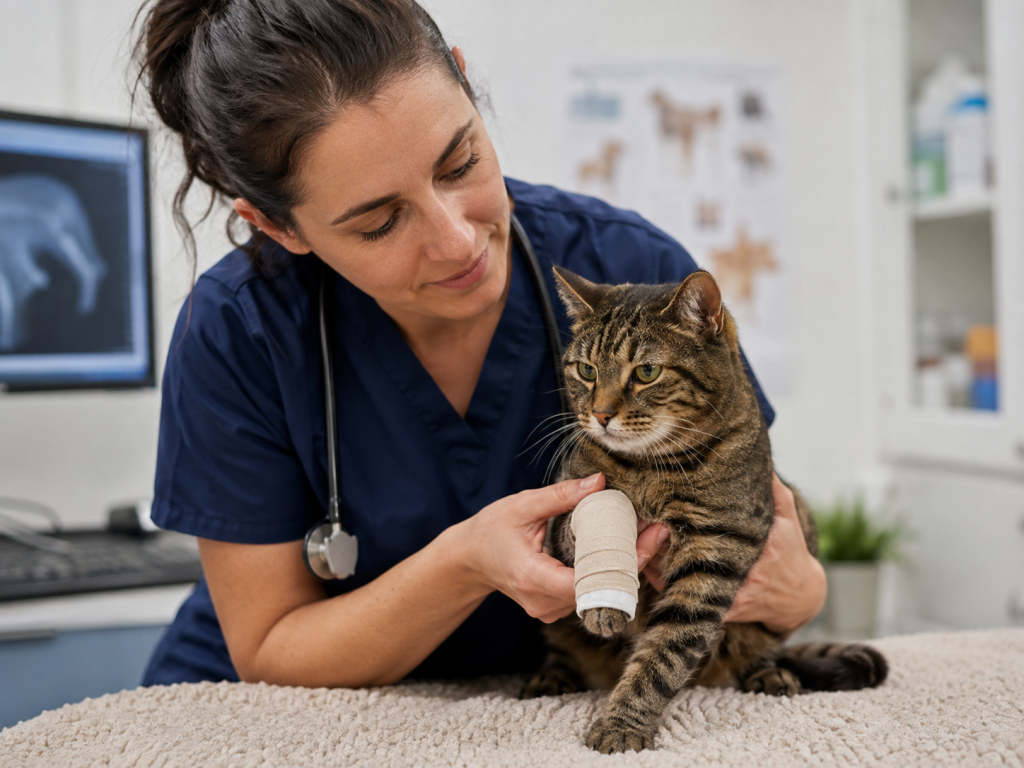
Fractures can involve the front legs, back legs, paws, toes, pelvis, jaw, or other bones. Some fractures are simple and stable, while others are displaced, unstable, open, infected, or connected to more serious trauma. A veterinary exam and diagnostic imaging are needed to understand the injury and choose the safest treatment plan.
The American College of Veterinary Surgeons overview of fractured limbs explains that fracture repair may involve devices such as bone plates, screws, nails, pins, wires, or external fixation depending on the injury and patient.
Because fractures can be painful and may worsen with movement, do not try to straighten, splint, or manipulate the limb at home unless a veterinarian specifically instructs you to do so. Keep your pet confined, limit movement, and call a veterinary hospital for guidance.
Signs Your Pet May Have a Fracture
Some fractures are obvious, but others are not. Contact a veterinarian if your dog or cat has signs such as:
- Sudden limping or refusal to use a leg
- Holding a limb up or keeping weight off one paw
- Visible swelling, bruising, or limb deformity
- Pain when touched or reluctance to be handled
- Dragging a leg, stumbling, or difficulty standing
- A wound near the suspected fracture site
- Injury after being hit by a car, falling, or another traumatic event
If your pet has severe pain, trouble breathing, uncontrolled bleeding, collapse, or a recent major trauma, seek emergency veterinary care immediately. Fracture repair can sometimes be planned after stabilization, but urgent injuries should not wait for a routine appointment.
Fracture Repair at Sequoia Animal Hospital
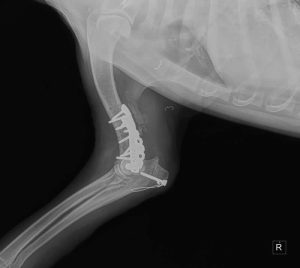
Sequoia Animal Hospital provides orthopedic evaluation and selected fracture repair services from our hospital in Tulare. The process may include an exam, digital radiology, review of prior X-rays or records, in-house laboratory testing before anesthesia, medication review, and a discussion of surgical options, recovery needs, and possible referral if needed.
Fracture repair requires careful evaluation of the bone, surrounding soft tissues, pain level, patient stability, implant options, anesthesia planning, and recovery needs. Our team will explain what treatment is appropriate through Sequoia Animal Hospital and when referral is the safest option.
Each pet is evaluated individually. Some fractures may be appropriate for treatment through Sequoia Animal Hospital, while complex fractures, open fractures, multiple-trauma injuries, or unstable patients may need emergency care, referral to a board-certified surgical specialist, or another facility. If referral is the safest choice, our team will explain why and help guide the next step.
Types of Fracture Repair
The right fracture repair method depends on the bone involved, the fracture pattern, the pet’s age and size, the stability of the injury, the condition of the surrounding soft tissue, and the pet’s overall health. Options may include surgical stabilization, splinting or bandaging in selected cases, or referral for advanced repair.
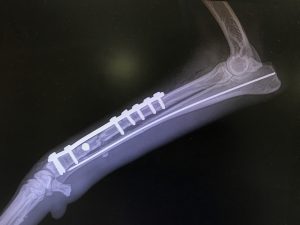
Some orthopedic fracture repairs use internal fixation, such as plates, screws, pins, or wires. Other cases may involve external stabilization or another approach. The goal is to align and stabilize the bone so healing can occur while keeping the pet as comfortable and safe as possible.
Sequoia Animal Hospital can help you understand whether your pet’s injury may be managed locally or whether referral is recommended. When prior X-rays have already been taken, please ask the previous hospital to send the images and medical notes before your visit when possible.
Pain Control, Surgery Planning, and Recovery
Fractures are painful, so comfort and safe handling are important from the beginning. Depending on your pet’s condition, our team may discuss pet pain management, activity restriction, medication instructions, surgical timing, anesthesia considerations, and the safest way to move your pet before and after treatment.
After fracture repair, recovery may include strict activity restriction, incision or bandage monitoring, medication instructions, follow-up X-rays, recheck visits, and gradual return to movement. The exact plan depends on the fracture, repair method, and your pet’s healing progress.
When appropriate, related services may support recovery and comfort, including diagnostic imaging, lab testing, pain management, and veterinary laser therapy as part of a veterinarian-directed care plan.
Fracture Repair for Dogs and Cats From Tulare and Nearby Communities
Orthopedic fracture repair is not available at every general veterinary hospital. Sequoia Animal Hospital welcomes pet owners from Tulare and nearby Central Valley communities who need evaluation for broken bones, traumatic injuries, limping, mobility problems, and planned orthopedic care.
Pet owners visit us from Tulare, Visalia, Farmersville, Tipton, Pixley, Exeter, Lindsay, Porterville, Corcoran, and other nearby communities.
For broader regional surgical information, visit our Central Valley Veterinary Surgery and Orthopedic Care page. You can also learn more about our orthopedic surgery, pet surgery, TPLO surgery, and cruciate ligament repair services.
Fracture Repair Questions
Does Sequoia Animal Hospital repair fractures in dogs and cats?
Sequoia Animal Hospital provides orthopedic evaluation and selected fracture repair services for dogs and cats. The best treatment plan depends on the fracture type, diagnostic imaging, pain level, soft-tissue injury, overall health, and whether referral or emergency care is needed.
How do I know if my pet has a broken bone?
Signs may include sudden limping, refusal to use a leg, swelling, pain, limb deformity, or injury after trauma. X-rays are usually needed to confirm the fracture type and guide treatment.
Should I splint my pet’s leg at home?
Do not try to straighten, splint, or manipulate a painful limb unless a veterinarian tells you to do so. Keep your pet confined, limit movement, and call a veterinary hospital for guidance.
Does every fracture need surgery?
No. Some fractures may be managed without surgery in selected cases, while others need surgical stabilization or referral. A veterinary exam and X-rays are needed before deciding the safest option.
What records are helpful for a fracture repair consultation?
If your pet has already been seen elsewhere, bring or request prior exam notes, X-rays, lab results, medication lists, and discharge instructions. These records can help our team understand the injury and plan the next step.
Do you see fracture cases from Visalia, Porterville, Corcoran, and nearby areas?
Yes. Sequoia Animal Hospital is located in Tulare and welcomes pet owners from Visalia, Porterville, Corcoran, Farmersville, Tipton, Pixley, Exeter, Lindsay, Strathmore, Terra Bella, Ducor, Allensworth, and nearby Central Valley communities.
Contact Sequoia Animal Hospital About Fracture Repair
If your dog or cat is limping, has a suspected broken bone, or has been told fracture repair may be needed, contact Sequoia Animal Hospital in Tulare. Our team can help you understand what records, X-rays, lab results, or medication information may be helpful before an orthopedic evaluation.
Contact Sequoia Animal Hospital to ask about fracture repair for dogs and cats in Tulare, CA, or return to our Orthopedic Surgery page.
Reviewed for accuracy by Dr. Deol and the Sequoia Animal Hospital veterinary team.